


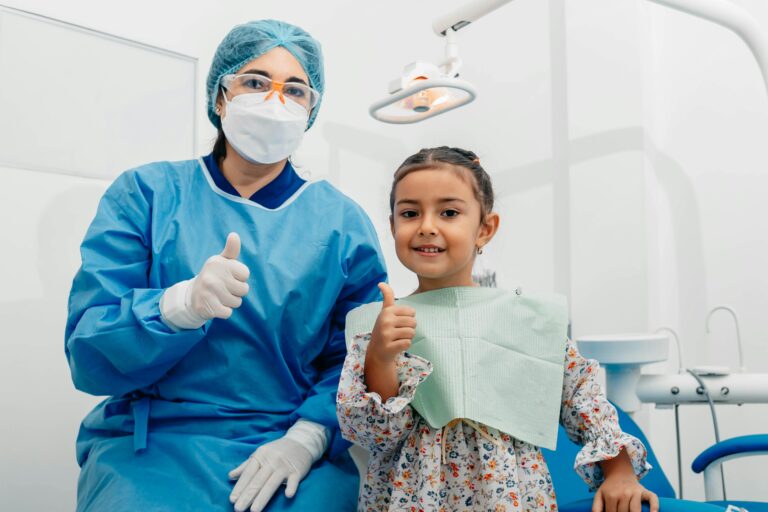
Your child’s first dental visit, cavities in baby teeth, or concerns about changing teeth: as a parent, you may have many questions about your child’s oral health. At Tandartspraktijk Scheldebuurt in Amsterdam Zuid, we understand this very well. In this comprehensive guide, we answer all the important questions about children’s dentistry so that you are well prepared.
When should my child see the pediatric dentist for the first time?
A common question asked by parents is: at what age should my child first visit the dentist? We recommend that your child see the dentist for the first time from the age of 1 year (or older) b

rendering. At this age, most children already have some teeth and it is important to keep a close eye on oral health.
By going to the dentist early, any damage or problems can be detected early. In addition, your child will get used to the dentist and the environment at an early age, which can prevent a lot of anxiety later on. You can also bring your child with you to your own checkup appointment, so the child can get used to the situation calmly.
The importance of milk teeth: why proper care Is essential
Many parents think that milk teeth are less important because the teeth will be replaced anyway. Nothing could be further from the truth. Properly cared for baby teeth are the foundation for healthy permanent teeth. The baby teeth have several important functions:
Retaining space for permanent teeth: Milk teeth actually preserve space for permanent teeth. If baby teeth are lost too early, it leads to space deficiency later. This makes intervention when the child is older through braces necessary.
Preventing problems: Inflammation and cavities in the baby teeth can affect later permanent teeth. Cavities in the baby teeth can affect the existing adult teeth. Therefore, it is important to treat problems with the baby teeth early.
Impact on development: The baby teeth are important for your child’s talking, swallowing, chewing and biting. It also affects facial and jaw development.
Cavities in baby teeth: how do they occur and what can you do?
Cavities in children are unfortunately very common. This is because baby teeth are not as strong as adult teeth due to their enamel structure. As a result, cavities can occur more quickly. But how do cavities actually occur?
The formation of cavities: When bacteria in the mouth form a sticky substance, we call it plaque. When this comes in contact with sugars from food and drink, it creates acid. The acid then attacks the enamel of the teeth, which can cause a cavity to form. You can read more about how to prevent cavities in your child here.
Recognizing cavities: Persistent bad breath, pain or tooth sensitivity can indicate a cavity. Sometimes the cavity can be seen as a white, chalky spot or dark spot on the tooth. Do you suspect your child has a cavity? If so, make an appointment with our pediatric dentist in Amsterdam Zuid immediately.
Treatment of cavities: If the dentist discovers a cavity during the check-up, he takes the time to discuss it carefully. We explain in an understandable way what a cavity is and how we will fix it. The dentist communicates with your child in an open, honest and understandable way so that your child knows what is going to happen. This prevents the child from becoming unnecessarily afraid of the dentist.
Not every cavity is filled right away. If the cavity is small, a fluoride gel or varnish may be applied to the tooth to stop the process. Is the cavity larger? Then the affected part is removed and the tooth is repaired with tooth-colored filling material.
How often should my child see the dentist?
After your child first visits the dentist, it is important to keep going back regularly. We recommend an appointment every six months. That means going to the dentist twice a year.
During these appointments, the dentist looks at your child’s teeth and checks that everything is going well. In addition, brushing instructions and nutritional advice are also given during the checkup. Sometimes the dentist may also recommend more frequent or less frequent visits, depending on how your child’s teeth look and how healthy they are. If your child is more likely to have cavities, your child may need to come for checkups more often each year.
The goal is always to ensure that your child’s teeth remain healthy and strong. In human teeth, most cavities occur between the fourth and twenty-first year of life. This is why we devote extra time and attention to this age group.
Teething: what to expect?
Teething is an exciting phase for both children and parents. But when does this process begin and what is normal?
The first permanent molars (age 6): When your child is 5 to 6 years old, the first permanent molars will come through. Often the child does not notice this. This is because the molars are behind the back molars of the milk teeth, so no milk molars separate when the first permanent molars emerge.
The changing of teeth: When the remaining teeth change, a baby tooth or molar first falls out before the permanent element comes through. When your child is about 12 years old, the last baby teeth and molars erupt and the last permanent molars and teeth will come through.
Extra sensitive during the eruption phase: Breaking permanent teeth are extra vulnerable to cavities because the enamel has not yet fully hardened. Therefore, good oral hygiene is extra important during this period.
Tips for good oral care of your child
As a parent, you play a crucial role in your child’s oral health. These tips will help you lay the foundation for healthy teeth:
Brush from first tooth: Start brushing from the moment the first tooth has erupted. Use a small toothbrush with soft bristles and put a small glob of toothpaste on it. Up to 2 years of age, teeth can be brushed once a day and twice a day from 2 years of age.
Brushing up to age 12: Up to age 12, it is important to brush teeth at least once a day, preferably in the evening. Many parents are too quick to think that children can brush on their own, when in fact they still need guidance. For more information on how to guide your child to brush their teeth, watch this video.
Use fluoride toothpaste: Fluoride makes teeth stronger and prevents cavities from forming. For young children, use a toddler toothpaste with fluoride. Children 3 years and older who are old enough to rinse and spit can start using toothpaste that contains at least 1,000 ppm fluoride.
Pay attention to dietary habits: Limit sugary drinks such as fruit juice and lemonade. Rather choose water and healthy snacks. We recommend a maximum of seven eating and drinking occasions per day. It is better to finish a glass of soda in one sitting, rather than sip every 15 minutes.
Avoid prolonged bottle sucking: Frequent sucking on a baby bottle or anti-leak cup containing fruit juice, syrup or other sweet drinks can damage teeth. Because the teeth are in contact with sugars for long periods of time, there is a high risk of developing sucking bottle caries.
Preventive treatments at the pediatric dentist’s office
In addition to good home care, there are preventive treatments that can help keep your child’s teeth healthy:
Fluoride Treatment: If the risk of cavities is greater, the dentist may perform an additional fluoride treatment on your child. This involves applying a fluoride gel or varnish to the teeth to make them stronger and less susceptible to cavities.
Sealing molars: To prevent cavities, the pediatric dentist can seal the molars. The molars are covered with a thin layer of fluoride-containing cement or synthetic resin. This prevents dirt from accumulating in the deep grooves of the molars.
Brushing instruction: During the check-up, your child will receive brushing instruction. Our dentists and assistants will teach your child in a fun, playful way how to properly care for their teeth. You as a parent will also receive tips on how best to encourage this.
Are treatments for children free?
It is possible for children to go to the dentist for free. In the Netherlands, children up to age 18 are entitled to free dental care through the basic insurance. This means that they are eligible for regular check-up and treatment appointments at the dentist at no cost.
What is reimbursed?: The cost of periodic checkups, prevention and treatments such as teeth cleaning and cavity filling are covered under the basic insurance. You also pay no deductible for your child’s treatments.
Beware of additional costs: Even though dental care for children is free of charge, parents should still consider possible costs associated with specific treatments. For example, consider braces treatment at the orthodontist. This is often not covered by basic insurance and may incur additional costs. It is therefore wise to purchase supplemental dental insurance to be prepared for this.
Why choose dental practice scheldebuurt in Amsterdam Zuid?
At Scheldebuurt Dental Clinic, we understand that children can sometimes feel nervous about visiting the dentist. Therefore, we have created a child-friendly environment designed to reduce children’s anxiety.
Specialist knowledge:Our experienced pediatric dentists specialize in pediatric dentistry and know exactly how to put young patients at ease. They not only have the same knowledge and skills as regular dentists, but also know how to best communicate with children.
Personal touch: Our dentists never get frustrated if things don’t go as planned for a while. They are never rushed and always willing to postpone a treatment if they sense that your child is not ready. We take our time and explain everything well in a playful manner.
Healthy habits for the future: We solve problems with your child’s teeth and prevent future problems by focusing on healthy habits and long-term oral health. Children are guided in developing good oral hygiene.
Clear communication: So you always know where you stand, not only in terms of appointments, but also in terms of costs.
Easily accessible: Dental practice Scheldebuurt is a practice located in the Rivierenbuurt of Amsterdam South, easily accessible for families from the area.
It is important to know that we do not do intoxication in children.
make an appointment today
Our pediatric dentist in Amsterdam South is ready to provide your child with the best dental care. Whether it’s a periodic checkup, preventive treatment or a specific procedure, you can count on our expert dentists who specialize in treating children.
We understand the importance of putting children at ease and strive to provide a positive and comfortable experience. Do you have any questions or would you like to schedule an appointment? Feel free to contact us for more information about our pediatric dental services in Amsterdam Zuid.
Taking care of your child’s teeth is very important. Choose professional children’s dental care at Scheldebuurt dental practice in Amsterdam Zuid.